Thursday, 26 July 2012

Week 3- Hussein Chalayan and Post-Modern Fashion

Hussein Chalayan

Chalayan is an artist and designer, working in film, dress and installation art. Research Chalayan’s work, and then consider these questions in some thoughtful reflective writing.


Hussein Chalayan, Burka (1996) (99
6
                                                                 Hussein Chalayan, Afterwords, 2000
1. Chalayan’s works in clothing, like Afterwords (2000) and Burka (1996) , are often challenging to both the viewer and the wearer. What are your personal responses to these works? Are Afterwords and Burkafashion, or are they art? What is the difference?Not all clothing is fashion, so what makes fashion fashion? (Research some definitions  for these terms.)

Fashion isn't Just considered style, clothes or even expense. It is Rather a social status and reflected physical appearance of ones personality or even status in society. It is a fine line in todays modern society to define a difference between what is Art and what is fashion, Both Art and Fashion challenges people and raises controversy. 
" There is a need to define the term fashion, as this chapter is primarily concerned with the sequence of events that form a process which trends in fashion clothing and accessories emerge.Breward (2003, p.09) describes fashion an an important conduit for the expression for social identity, political ideas and aesthetic taste.Perna (1987) defines fashion as ' an expression of the times'. Such broad  interpretations fit well with the modern consumer society in which many aspects of peoples' lifestyles for vehicles are reflecting peoples social status or success." (2007, Bruce, M and Hines. p. 169)

Personally I think both ' Afterwards (2000) ' and ' Burka (1996) '  Reflect this fine line between what is art and fashion, to me they cannot be clearly defined in todays' society but can be clearly analysed in both categories. To me I find the work both provoking and questioning the aspects of both, It has become a wearable art, in my opinion that is the safe term to define his work without really placing it into what it has really come down too. You can wear them as clothing but is tests the boundaries just as art in a post modern world does.


2. Chalayan has strong links to industry. Pieces like The Level Tunnel (2006) and Repose (2006) are made in collaboration with, and paid for by, commercial business; in these cases, a vodka company and a crystal manufacturer. How does this impact on the nature of Chalayan’s work? Does the meaning of art change when it is used to sell products? Is it still art?


The works do show a change in His usual style, but that is what a commission is,it is yours to a point. 

The meaning of art does change because it is no longer a social issue or cultural one, but it become something that finds and seeks out an audience and emphasises the issue of the product. As seen in ' Repose' the dark lit room and rather subtle tones with the one blue streak where the crystals  have been laid out and exposed to ' show off' the crystals beauty.

As also with ' The Level Tunnel'  the Subtle tone, mood lit arena and a motion effect tunnel, portrays the vodka company's  expectation of the effect and feel of the drink. It's all round surrounding has emphasised the product and the addiction of the ' surreal' motions that's usually come with drinking alcohol.

 Hussien Chalayan 'Repose' (2006)

When Art is used to sell something it loses the usual meaning and gains another one. The focus isn't on the work itself but  focuses on how the product can be enhanced in a new, fancy and interesting way so people would stop and think about this product and what its supposed to give me if i buy it. Whether it be Vodka or Crystals this work clearly shows how it has reflected and enhanced the product to give consumers a ' sneak peek'into a product they could potentially buy.
                                                 
Hussien Chalayan   'The level tunnel' (2006)


3. Chalayan’s film Absent Presence screened at the 2005 Venice Biennale. It features the process of caring for worn clothes, and retrieving and analysing the traces of the wearer, in the form of DNA. This work has been influenced by many different art movements; can you think of some, and in what ways they might have inspired Chalayan’s approach?

by m
Hussein Chalayan, still from Absent Presence, 2005 (motion picture)


4. Many of Chalayan’s pieces are physically designed and constructed by someone else; for example, sculptor Lone Sigurdsson made some works from Chalayan’s Echoform (1999) and Before Minus Now(2000) fashion ranges. In fashion design this is standard practice, but in art it remains unexpected. Work by artists such as Jackson Pollock hold their value in the fact that he personally made the painting. Contrastingly, Andy Warhol’s pop art was largely produced in a New York collective called The Factory, and many of his silk-screened works were produced by assistants. Contemporarily, Damien Hirst doesn’t personally build his vitrines or preserve the sharks himself. So when and why is it important that the artist personally made the piece?

Personally when an artists personally makes a piece they have given a part of their soul. 

As an artists sometimes struggle with the work, comes to terms with how it has turned out and how the ideas are conveyed, so in turn everything becomes a process. It takes a true and valuable process to really engage the viewers.
Understandable with great structure such as Anish Kapoor, His sculptures are on such large scales it would be nearly impossible to construct them using the industrial vehicles alone. But in art there is only so much you can do at that type of scale. Whilst in this case I feel that is he had done them himself he would really be able to comment and express about the making process, how the ideas came through as he was making and the difficulty with working with the material. When you put an idea in front of a person and say ' I want this done by Friday' it becomes just and idea put through and made industrially and not created with passion, aggravation and time like it should be.


Anish Kapoor 
'Cloud Gate'


References

http://www.husseinchalayan.com/#/home/
http://www.designboom.com/eng/interview/chalayan.html 
http://www.husseinchalayan.com/blog/ 


leelovevic (20 Nov 2009). Part 2 Hussein Chalayan Autumn Winter 2000  [Video file].
Retrieved : http://www.youtube.com/watch?v=qsNLsnnAY8Q

Bruce, M and Hines, T. (2001 1st ed , 2007 2nd ed) Second Edition Fashion Market, Contemporary Issues, Oxford, U.K : Elsevier Ltd.


Week 2 - Post-Modernism - Ai Weiwei and Banksy.


1. Define Post-Modernism using 8-10 bullet points that include short quotes.


Reletivisim : 

" Postmodernism is associated with reletivism. Reletivism is the idea that "anything goes" It is the position where one has left the absolute truth, and instead embraced the idea that knowledge is dependent on one's perspective."(Saugstad, 2001, para. 5-6)

Irony:

" Postmodern irony is allusive, multilayered, preemptive, cynical, and above all, nihilistic. It assumes that everything is subjective and nothing means what it says. It's a sneering, world-weary,bad irony, a mentality that condemns before it can be condemned, preferring cleverness to sincerity and quotation to originality. Postmodern irony rejects tradition, but offers nothing in its place."

(Jon Winokur, The Big Book of Irony, St. Martin's Press, 2007)

Deconstructive Postmodernism:


" Deconstructive Postmodernism seeks to overcome the modern worldview, and the assumptions that sustain it,though what appears to be an anti-worldview.It "deconstructs" the ideas and values of Modernism to reveal what composes them and shows that such modernist ideas as " equality" and "liberity" are not "natural" to mankind or "true" to human nature but are ideals, intellectual constructions. " (Witcombe, 2000, para. 08)


Pluralism:

"Let me first say that I believe postmodernism represents an important virtue. This virtue is pluralism.Remember that I said that in postmodernism on has left the idea of a grand narrative. There are many histories and ways of looking at reality in contemporary society, and a diversity of opinions.This can be good. I do not believe that all the different paradigms and approaches to reality in the global society today all can be true. "" (Saugstad, 2001 para. 14)


Social Construction:

"Another idea within postmodernism, is social constructivism. I guess this idea can appear in different versions. At its most extreme, it might be something like : ' Reality is created by social reality. ' But the main idea is that there is no objective knowledge or absolute representation of reality.Many of our concepts and catagories are based on the social reality, and not because we veridically can represent physical reality. " (Saugstad, 2001 para. 11) 


No Grand Narrative:

"A narrative is a history - a story. In this book from 1979, Lyotard emphasized that in postmodernism one has left the idea of a grand narrative.(Saugstad, 2001 para. 08)


Hyper-Reality:

"The new postmodern world tends to make everything a simulacrum. By this Baudrillard means a world in which all we have are simulations, there being noe 'real' external to them, no 'original' that is being copied. There is no longer a realm of the 'real' versus that of 'imitation' or 'mimicry' but rather a level in which there are only simulations. " (Baudrillard, n.d. para. 04)

Constructive Post Modernism


"Constructive postmodernism does not reject Modernism, but seeks to revise its 


premises and traditional concepts." (Witcombe, 2000, para. 14)


2. Use a quote by Witcombe (2000) to define the Post-Modern artist.(page 24) 


According to Witcombe (2000):


The post-modern artist is "reflexive" in that he/she is self-aware and consciously 


involved in a process of thinking about him/herself and society in a deconstructive 


manner, "demasking" pretensions, becoming aware of his/her cultural self in history, 

and accelerating the process of self-conciousness. 


3. Use the table on pages 47 and 48 in your ALVC handbook to summarize the list of the features of Post-Modernity.


  • Hyper-Reality
  • Flexible 
  • No concern for " Depth" 
  • Popular Culture 
  • Process Art 
  • Irony and Play
  • Simulacrum
  • Hybridity 
  • Promiscuous genres 
  • Intertextuality 
  • Substitution for the "real" 
  • Art as the recycling of culture 
  • Reflectivity 


Use this summary to answer the next two questions.


4. Research Chinese artist Ai Weiwei's 'Han Dynasty Urn with Coca-Cola logo'(1994)

in order to say what features of the work could be considered Post-Modern.


'Han Dynasty Urn with Coca-Cola logo'(1994), Ai Weiwei 


Ai Weiwei dropping a Han Dynast Urn. 


"We shall not have succeeded in demolishing everything unless we demolish the ruins as well."


Alfred Jarry...


How Ai Weiwei's work is considered a 'Postmodern' is the many elements which explore the concepts behind what we consider as Postmodern art such as the use of irony playing with the idea of putting a price on such "priceless" items in this case on the Han dynasty urn. It also shows the reflective nature of the culture today. The universal clash between consumerism, Histories and tradition.


" On one urn Ai painted the Coca-Cola logo, transforming the antique vessel into a contemporary artwork" (Yap, 2012)


By using these two main key ideas of post modernism Ai Weiwei has used those popular culture of today placed it within a historically valued artifact and replaced with value and worth of the original piece with a price tag of culture today. So it no longer becomes Historically significant and rich in traditions it is now expression of the consumer influences on our social culture and what we know and see today.


6. Research British artist Banksy's street art, and analyze the following two works by the artist

to discuss how each work can be defined at Post-Modern.(Use your list from question 3.)


'Flower Riot', Banksy 


Los Angeles (2008), Banksy 


Both Works by the underground Graffiti artist Banksy cleary shows key ideas of post modernism with him also playing with the ideas of Irony within society.


Bansky talks about the riots and instead of the ' characters' throwing bricks and all they throw flowers, where again his play in irony or as one interview had said it is where " fluffy meets spiky again".

Many of the graffiti artists say Bansky tracks too much attention, but what he shows through all his works and especially here is 'reflecting' on todays society, not look at him but "look around you".


The main focus is society and the games it plays on both the mind on culture, how hes taking real life situations and breathed fresh air into but also slapped on a twist to prove a point.How ironic for a caveman who is subjected to going out and collecting his meal by hunting whereas now instead of the traditional means of catch and kill, we take the easy way out and fall prey to easy takeout.


His media is also a use of what is popular culture today. Graffiti art has become widely popular within the universal society, more and more artists have chosen this pathway and media because of the high demand and most recently status of the true graffiti artists. It has become the new trend, reinventing the use of stencils , recycling old ideas to new issues which grabs local attention.


Refrences:


AUT University. (2012). Academic literacies in visual communications 2: Resource book.


Auckland, New Zealand. Lyceum Press AUT University.


Wednesday, 25 July 2012

Week 1- Semester 2

a scene from Florentin (2004)


1. What do you understand by the word 'claymation'?

It is a form of animation done using the medium, 'clay' . Objects or small figures are created and a photographic technique called ' stopmotion' is used to make the characters that have been made appear to move as the photographs are taken. Then the photographs are put together to create the 'Claymation'. Usually to make the animation the animators opt for 10-12 frames per second  instead of the 24 frames usually used for films. It is used in a lot of children films and programs seen today. i.e ' Chicken Run' 'Bob the Builder' But hasn't been restricted to it as it is used in the adult program 'Robot Chicken'.

2. What is meant by the term 'surrealistic Garden of Eden'? and 'all that is natural goes awry'?

' surrealistic Garden of Eden' in Djurbergs work describes the surreal view, the dream-like state of what the garden is usually portrayed as, Instead of bright colours and the no imperfections, she shows dark and raw colours to match the eerie physical state she has given them. They seem more like a scene from a bad dream then they do of the Garden of Eden. 
'all that is natural goes awry'  shown through this darker Eden we see how this is not the typical scene we would see this Eden which holds such a perfected image in the world we see the models or the organic life as raw, dark and rather disturbing, which confronts us with unnatural feelings and views of how we perceive this garden.

'Experiment' 2009

3. What are the 'complexity of emotions' that Djurberg confronts us with?
The raw detail and dark colours of this work gives the unsettling feelings, with confusion we see how a dream-like child's dream can end up being twisted, mutated and somewhat fearful. Confronting us with a place where you'd want to escape to and want to escape from, which digs deep into the psyche. 
 
4. How does Djurberg play with the ideas of children's stories, and innocence in some of her work?

A lot of fairy tales have the cliche view of a child innocence, She points out that appearances can be deceiving and not all children are as innocent as they seem. So with this idea she had she plays around with these stories and puts them out as if they were in the minds of the not so innocent children, still keeping the fundamental elements of what a fairy-tale usually has (good and bad characters) but twisting and tainting them like the child's mind.

5. There is a current fascination by some designers with turning the innocent and sweet into something disturbing. Why do you think this has come about?

Artists can see opportunity when you dabble in this idea because of its relevance towards many social and global subjects which many can identify with. It also plays with the idea of growth, growth of the innocent mind into one tainted by adulthood. It's a subject which can both be seen in a literal sense or metaphorically because of how controversial and contradicting it can be. It also disturbs the mind and  plays with that notion of change and trends. It has become the trend and the 'whats hot' in the commercial industry, seen in a lot of children's and teens toys and games.

6. In your opinion, why do you think Djurberg's work is so interesting that it was chosen for the Venice Biennale?

In my opinion I think her work is unique with the controversial ideas she plays with, it cause stir among the public getting them to argue how it is insensitive or it shines like and a public concern for how youth is today and the upcoming future.
The aesthetics of it are also in the popular category of whats the trend ad it shines a new light on how things can be seen. I can see alot of sci-fi influence in her works with this ' Garden of Eden' in the colours and shapes of what the human innards look like which is also another area which has become a new popular subject.

7. Add some of your own personal comments on her work.

scene from ' I found myself alone'

I enjoy this dark look of her work,  everything about it both aesthetically and contextually plays with the mind and  imagination. It puts a surrealistic perspective breathing new life  into old and worn out concepts reviving it for more of the general public then to just the specific targets.


Refrences


Kazanjian, D. (2008). Wicked fairy tales. Retrieved from http://dev.www.zachfeuer.com     
      /wp-content/uploads/ND_Vogue_1108.pdf

Schwabsky, B. (2006). Emerging artist. Retrieved from http://www.zachfeuer.com 
       /wp-content/uploads/ND_ModernPainters_0906.pdf

Saturday, 26 May 2012

Landscape and the Sublime

Monolake 2, California (1999) Richard misrach


1.     Define the Enlightenment, including its context (time and place).


The Enlightenment was taking place during the 18th century yet the true start and end point is unknown it was a gradual happening Yet it still played a major role in the visual community, Centred mostly in France but spread through the western cultures. The idea of the Enlightenment was moving on from Religious ideals and starting to understand a more scientific understanding based on human beliefs rather than the sense of belief by the authority i.e. the church. It was when reason was the ultimate truth and experience was the evidence for it. It was the idea of progress into bigger understandings of the things we simply based ‘because it was god’s will’ too. The enlightenment may have ended in the late 20th century called the “Post-Enlightenment” but todays thought, ideas and opinions have been based around this movement. Without this movement we would be still stuck in the idealism of god, whereas the Enlightenment has given us the freedom to explore in both and even more without it being deemed blasphemy against god and his will.


2. Define the concept of the Sublime.


The Sublime in art is something that provokes many emotions and feelings, the overwhelming idea of this ‘thing’ being in front of us right now. It’s hat feeling of being in awe or even terrified of what is in front of you whether it be a great landscape or an oversized building. It is usually something of an epic scale in comparison to the other subject/s which causes this reaction. It allowed the sense of experience to provoke the imagination into dangerous scenarios without having to really experience it.


3. Explain how the concept of the Sublime came out of Enlightenment thought.


The Enlightenment had moved through and continued with the idea of progress. The progress of te importance of the “Hierarchy” of the painting world. The ever growing interest in the back dropped landscapes which were frowned upon previously had come about, because of this “Romantic” idea of how the attention to the detail of the landscape can emphasise largely on the subject, especially in the playful mythological paintings where being immersed in the habitat made them seem more real and you experience their being. With the appreciation of the landscape growing, the landscape became more surreal more open and wide, became never ending to create this sense of illusion for us the viewers, the development of romanticising a subject had moved and the detail onto the landscape was now the main idea. The over powering infinite, enormity or obscurity of the painting was to send the spectators into imagination and relieve certain tensions , it began to  undermine the Enlightenment idea of control, knowledge and being able to reason with the world.


4. Discuss the subject matter, and aesthetic (look) of Misrach's work to identify the Sublime in his work. Include some quotes from art critics and other writers who have written about his work.


“Richard Misrach is among the most influential, prolific, and internationally recognized photographers working      today. Best known for his epic ongoing project, Desert Cantos--an extensive and unique photographic exploration of place--Misrach consistently addresses political and social issues through the adaptation of different photographic strategies, even as he expands notions of traditional landscape practice, and builds a complex and poignant document of American culture. His subjects have included manmade floods and fires, military bombing ranges, mass graves of dead animals, sublime night skies, and details of paintings housed in the museums of the Southwest. In one recent series, On the Beach--which was inspired by Nevil Shute's postapocalyptic novel of the 1950s--Misrach's color photographs deal with the human figure seen at a distance on an unspecified beach or in the water, observed from an unsettling and difficult-to-identify point of view located high above. Misrach's newest publication, Chronologies is a compelling study of the photographer's process over the past 30 years. Stripped of their original context, the photographs--presented in chronological order--illuminate how the photographer thinks and works. Through fits and starts, reiterations and detours, the work evolves and matures, weaving in and out of the series for which Misrach has become known. Side-by-side, classic images and never-before-seen pictures flesh out the photographer's logic and complicate it at the same time. Ultimately, Chronologies is about time: The span of thirty years, the importance of time in each photograph, the chronology of a life within its time, and the book itself as a timepiece. [Misrach] offers a totally convincing sense of place--the Mohave, the California inlands, the Nevada deserts, over which he has roamed repeatedly. His moment of perception is always the present, gritted in by sand ochres and limned by sage green, mauve, and blond hues often emerging into an exquisite bleached depth, though sometimes reddened by dusk or fires. Misrach lives such moments to their sensory brim without standing on any ceremony. He gives us the feeling that what happens out there in the nominal wild happens for him and to him quite in advance of being filtered through any memory of art.[1] “


His works deal with the three ideas of The Sublime; enormity, obscurity and infinity. By using these vast and some notably recognisable areas we know how large  and broad the subjects are. We can obviously see the grand scale of the subjects and the overwhelming feeling they create He largely emphasise the landscape and he puts many things into perspective whether it be scale or importance.


Pyrimad lake (at night)(2004) Richard misrach

5. Add 2 new images of his work to your blog.

 Richard Misrach: Untitled, 2007, pigment print on Dibond, 59 by 787⁄8 inches; at PaceWildenstein

Outdoor Dining, Richard Misrach


6. Describe how does Misrach's photography makes you feel. How does it appeal to your imagination?

I find his work amazing, it’s capturing, and it really draws me in. It gives me the sense of adventure it gives me the sense of release as well; my imagination runs wild with all the physical and spiritual ideas. In a physical sense, it’s as if I can feel the snow, or the cold crisp breeze while silently watching the world evolve with me just watching and in the spiritual sense that it is like a release of emotions, takes away or even brings on fear to the over powering notion of the subjects, how it puts us into perspective on how little and insignificant we are compared to nature on its grand scale and how we can easily be drowned out but such things really does make you re-evaluate a situation and wonder if it really is as bad as you think.


7. Identify some other artists or designers that work with ideas around the Sublime, from the Enlightenment era as well as contemporary artists.


Frederic Edwin Church.- Painter, Enlightenment      Rainy day in the Tropics 1866


Mark Myer- Photograpgy, Contemporary

Josh Keyes, painter, contemporary


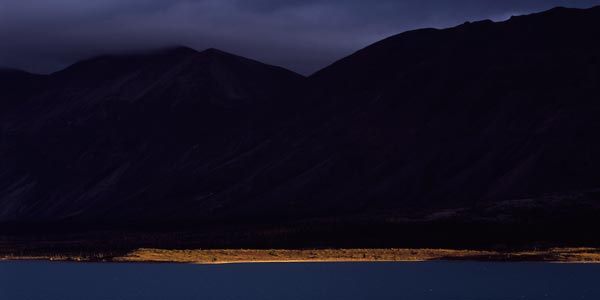
8. Add a Sublime image of your choice to your blog, which can be Art or just a Sublime photograph.


J_M_ W_ Turner (1775-1851)  the distruction of sodom 1805